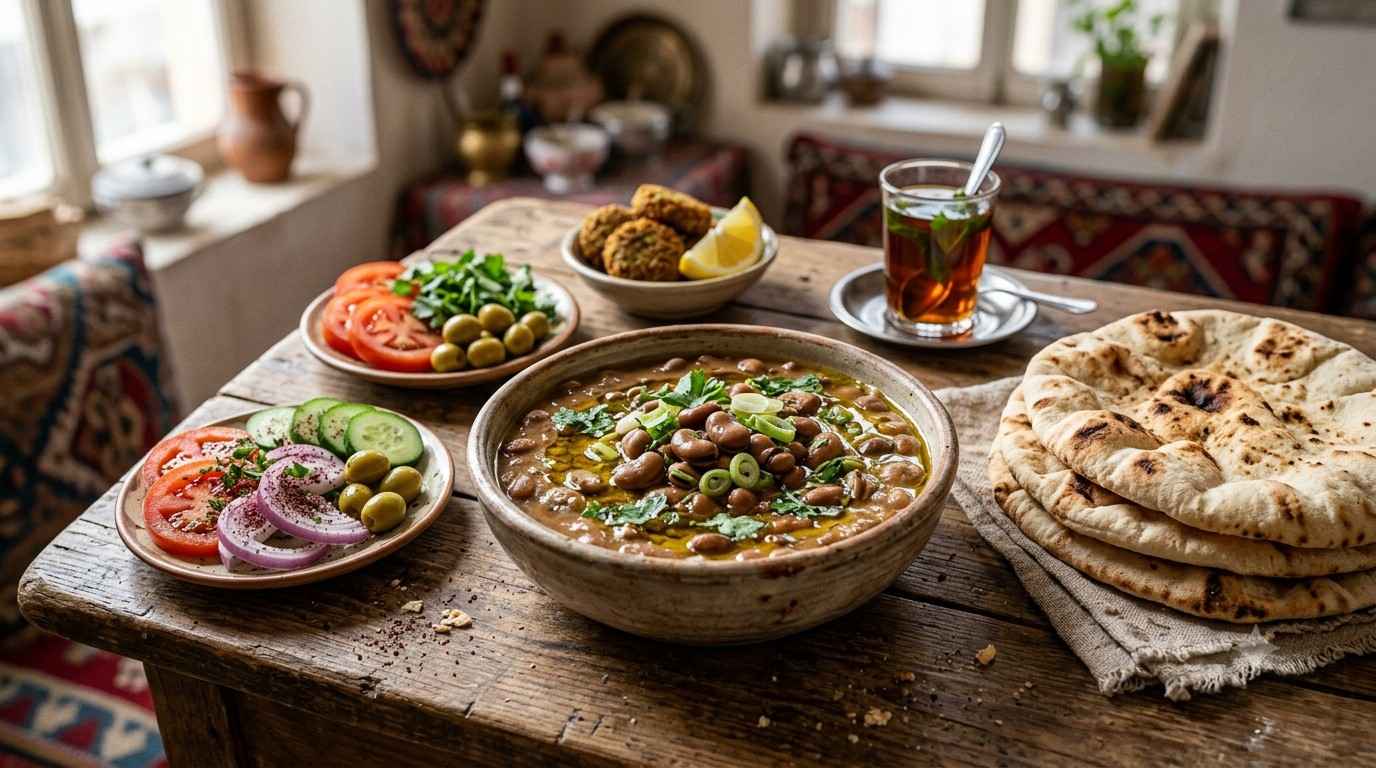
In Egypt, breakfast is more than the first meal of the day—it is a daily ritual rooted in history, family, and tradition. And at the heart of that ritual is ful medames, a simple yet deeply satisfying dish made primarily from slow-cooked fava beans.
Often served with olive oil, lemon juice, garlic, cumin, and fresh vegetables, ful medames may look humble, but its cultural importance is anything but small. For generations, it has been a staple on Egyptian tables, from home kitchens and neighborhood eateries to bustling street-food stalls.
So, how did a pot of beans become one of Egypt's most recognizable breakfast dishes?
What Is Ful Medames?
Ful medames, sometimes simply called ful, is a traditional dish of cooked fava beans. The beans are typically simmered slowly until tender, then seasoned according to taste.
A classic serving might include:
- Cooked fava beans
- Extra-virgin olive oil
- Fresh lemon juice
- Minced garlic
- Ground cumin
- Salt
- Chopped tomatoes, onions, or parsley
- Chili peppers or other spices for extra heat
It is commonly eaten with baladi bread, Egypt's traditional flatbread, which is used to scoop up the beans.
The beauty of ful lies in its flexibility. Some people prefer it creamy and mashed, while others enjoy the beans mostly whole. Toppings and seasonings can vary from one household or restaurant to another, making each bowl slightly different.
A Dish With Ancient Roots
Fava beans have been cultivated and eaten in the Mediterranean and Middle East for thousands of years, making legumes an important part of the region's food history.
Although the exact origins of modern ful medames are difficult to pin down, the dish is strongly associated with Egypt and has evolved alongside Egyptian food culture.
One of the most famous historical associations is Fasuliyya, an ancient area near Cairo's Bab al-Hadid that became linked in popular accounts with the cooking and sale of fava beans. Over time, ful developed into a practical food that could feed people affordably while providing substantial nourishment.
Its longevity is perhaps one of the clearest signs of its importance. Recipes change, cities grow, and food trends come and go—but ful has remained a familiar part of Egyptian life.
Ful medames is more than a breakfast dish—it is a taste of everyday Egyptian life, shaped by tradition, community, and generations of home cooking.
— A symbol of Egyptian food culture
Why Fava Beans Became So Important
The success of ful medames is closely connected to the humble fava bean itself.
Fava beans are filling, versatile, and relatively inexpensive. For communities where affordable sources of nourishment were essential, they made practical sense.
The beans can also be cooked in large quantities, making ful particularly suitable for households, restaurants, and street vendors serving many customers.
This practicality helped transform ful from an everyday food into a cultural institution.
But affordability alone doesn't explain its popularity.
Ful is also deeply satisfying. The combination of warm beans, earthy cumin, sharp lemon, fragrant garlic, rich olive oil, and fresh bread creates a meal that is simple but remarkably flavorful.
The Egyptian Breakfast Table
Ask many Egyptians about a traditional breakfast, and ful is likely to be part of the conversation.
A typical breakfast spread might include a bowl of ful alongside ta'ameya (Egyptian fava-bean falafel), boiled eggs, white cheese, pickled vegetables, tomatoes, cucumbers, and baladi bread.
Unlike a breakfast that is quickly eaten and forgotten, ful encourages a slower, communal style of eating. Dishes are placed in the middle of the table, bread is shared, and everyone can customize their portion with different toppings.
This makes ful more than a recipe. It is part of the rhythm of everyday Egyptian life.
Ful as Street Food
One of the most fascinating aspects of ful medames is its presence outside the home.
Across Egypt, ful can be found at small restaurants, breakfast counters, and street-food establishments. Vendors often prepare large pots of beans and serve them throughout the morning.
For workers heading to their jobs, students getting ready for school, and families enjoying a weekend breakfast, ful offers something dependable: a hot, filling meal that doesn't need to be complicated.
The experience of eating ful from a neighborhood vendor is also part of its appeal. The sounds of a busy street, the smell of warm bread, the preparation of toppings, and the constant movement of customers all become part of the meal.
The Secret Is in the Seasoning
The beans may be the foundation, but the toppings are what give ful its personality.
Cumin adds a warm, earthy aroma. Lemon juice brings brightness and acidity. Garlic contributes pungency, while olive oil provides richness.
From there, the possibilities expand.
Some versions include chopped tomatoes and onions. Others feature chili peppers for heat. Tahini, boiled eggs, fresh herbs, or pickled vegetables can also accompany the dish.
This adaptability means that there is no single universal bowl of ful. Instead, there are countless interpretations shaped by personal taste and local tradition.
More Than Just Breakfast
Although ful is strongly associated with breakfast in Egypt, its appeal isn't limited to the morning.
Because it is filling and relatively easy to prepare in large quantities, it can also appear as a lunch or dinner dish. In Egyptian households, the boundary between "breakfast food" and "anytime food" can be flexible.
Ful also has an important social dimension. It is the kind of food that can be served to a family without requiring elaborate preparation or expensive ingredients.
That combination of simplicity, accessibility, and flavor has helped it survive across generations.
Ful Medames Beyond Egypt
Egypt may be the dish's strongest cultural home, but ful medames has traveled far beyond its borders.
Fava-bean dishes are found across the Middle East and parts of North and East Africa, with different countries and communities developing their own approaches to seasoning and serving them.
As Egyptian cuisine has gained international attention, ful has increasingly appeared on menus around the world.
Yet its international popularity has not changed its essential identity. At its core, ful remains what it has always been: a comforting dish built around beans, seasoning, bread, and the traditions of everyday eating.
Why Ful Medames Still Matters Today
In an era when food trends often focus on elaborate dishes, exotic ingredients, and expensive dining experiences, ful medames offers a powerful reminder that great food doesn't have to be complicated.
Its ingredients are humble. Its preparation is straightforward. But its cultural meaning is profound.
- Represents accessibility and everyday nourishment.
- Preserves generations of Egyptian food traditions.
- Connects modern Egyptians with their cultural roots.
- Strengthens family and community bonds.
- Shows how simple ingredients can become culturally significant.
A Humble Dish With a Lasting Legacy
Ful medames began with one of the world's simplest ingredients: the fava bean. Yet over centuries, that humble ingredient became the foundation of a dish that is now inseparable from Egyptian breakfast culture.
Its story is not about royal kitchens or extravagant feasts. It is about ordinary people, everyday meals, neighborhood vendors, family traditions, and recipes passed from one generation to another.
That may be precisely why ful has endured.
Ful medames isn't just Egyptian food. It is a taste of Egyptian daily life—a humble, hearty dish that has turned simplicity into tradition.