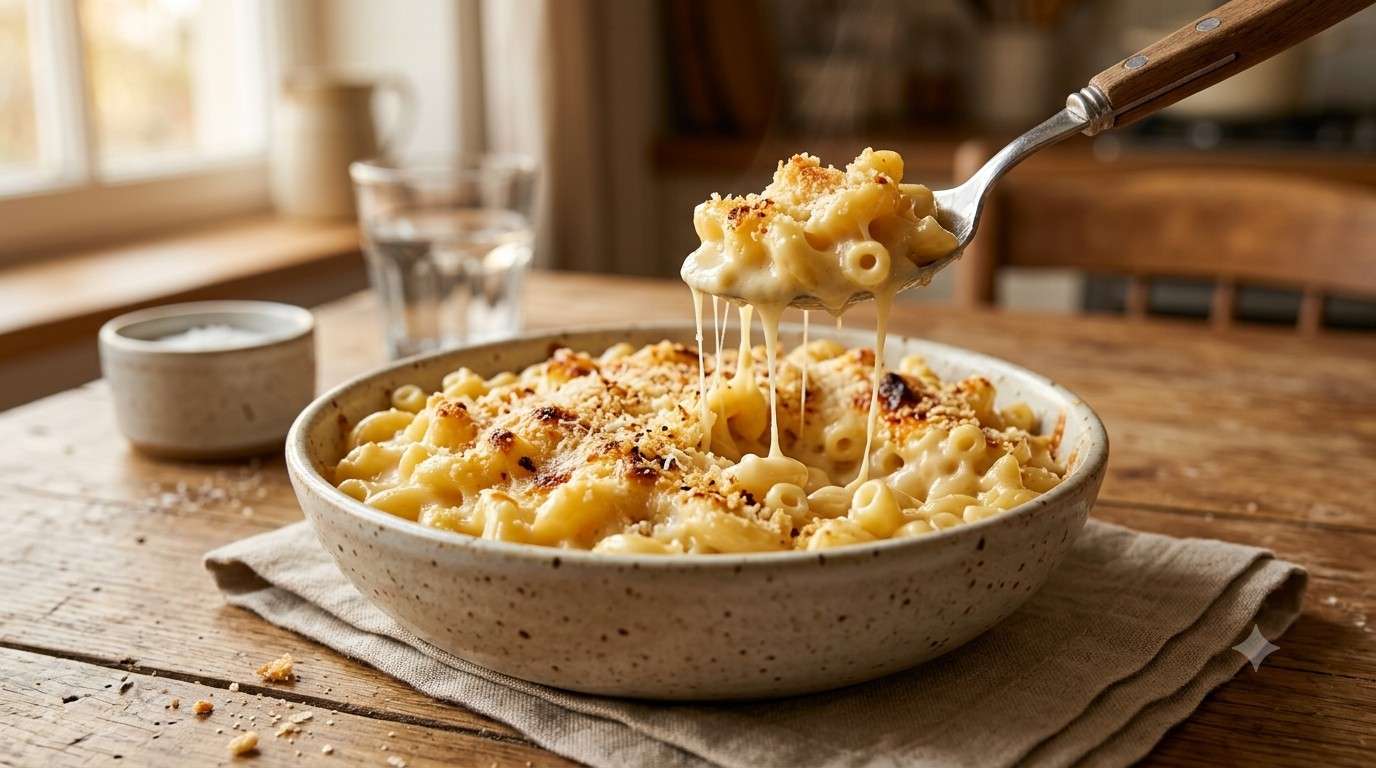
Few foods can make people feel instantly at home quite like mac and cheese.
Creamy, cheesy, warm, and wonderfully familiar, macaroni and cheese has become one of the world's best-known comfort foods. It appears on family dinner tables, restaurant menus, holiday spreads, school cafeterias, and fast-casual menus across different countries.
At first glance, mac and cheese seems almost too simple to be culturally significant: pasta, cheese, and a little seasoning. Yet behind that simple combination is a fascinating story of culinary evolution, changing food habits, industrialization, and global adaptation.
So how did a humble pasta-and-cheese combination become a comfort-food icon?
What Is Mac & Cheese?
At its most basic, macaroni and cheese consists of cooked pasta combined with cheese.
The classic version typically uses short pasta such as macaroni and a cheese sauce made with ingredients such as butter, flour, milk, and cheddar cheese. However, there is no single formula.
Some recipes use several types of cheese. Others add breadcrumbs, spices, vegetables, bacon, herbs, or different kinds of pasta.
Modern versions can range from a simple homemade casserole to elaborate restaurant creations featuring gourmet cheeses and unexpected ingredients.
Despite these variations, the central idea remains unchanged:
Pasta + cheese = comfort.
The Dish Has Older Roots Than You Might Think
Although mac and cheese is strongly associated with American cuisine today, the combination of pasta and cheese has much older European roots.
Historical recipes combining pasta with cheese appeared in Europe centuries before macaroni and cheese became a familiar modern dish.
In medieval and early modern European cooking, pasta-like foods were sometimes layered or combined with cheese and other ingredients. As pasta became more widely consumed, cooks continued experimenting with different ways of preparing it.
The exact origin of modern macaroni and cheese is therefore difficult to attribute to one person or one country.
Instead, the dish developed gradually through a long history of European culinary traditions before becoming particularly popular in North America.
How Mac & Cheese Became an American Classic
Mac and cheese eventually developed a particularly strong identity in the United States.
One famous historical connection involves Thomas Jefferson, who encountered pasta dishes during his travels in Europe and is often associated with introducing greater interest in macaroni and cheese to American dining culture.
Jefferson's household famously served macaroni and cheese, helping cement the dish's place in American culinary history.
But it was not simply wealthy households that turned mac and cheese into a national favorite.
Over time, improvements in food manufacturing, transportation, and packaging made pasta and cheese more accessible to ordinary households.
That changed everything.
The Rise of Convenience Food
One of the biggest turning points in the history of mac and cheese came with the rise of packaged foods.
As industrial food production expanded during the 20th century, companies began creating convenient versions of familiar dishes that could be prepared quickly at home.
Packaged macaroni and cheese became particularly successful because it solved a simple problem:
How do you make a warm, filling meal quickly and affordably?
The answer was a box containing pasta and cheese sauce ingredients.
The convenience was hard to resist.
Families could prepare a recognizable comfort food without needing to grate several cheeses, make a sauce from scratch, or spend a long time in the kitchen.
Why Mac & Cheese Feels Like Comfort
There is a reason people associate mac and cheese with comfort.
Its texture is soft and creamy. Its flavor is rich and familiar. It is warm, filling, and easy to eat.
But comfort food is about more than physical sensation.
Mac and cheese is often connected to childhood memories—family dinners, school lunches, holidays, rainy afternoons, or meals prepared by parents and grandparents.
Food memories can be remarkably powerful. A familiar smell or taste can transport someone back to a specific period of their life.
For many people, mac and cheese isn't just something they eat.
It is something they remember.
The Magic of Melted Cheese
Cheese is obviously the star ingredient.
Different cheeses can completely transform the character of the dish.
Cheddar provides the sharp, familiar flavor associated with many classic versions. Gruyère can add nuttiness and complexity. Parmesan contributes a salty, savory edge, while Monterey Jack or similar melting cheeses can create an especially smooth texture.
Some cooks prefer a combination of cheeses rather than relying on just one.
The key is finding the right balance between flavor, creaminess, and meltability.
That flexibility is another reason mac and cheese has survived for so long.
From Homemade Classic to Restaurant Favorite
Mac and cheese eventually moved far beyond the family kitchen.
Restaurants began experimenting with the dish, turning a familiar staple into something more elaborate.
Gourmet versions may feature smoked cheeses, truffle flavors, lobster, pulled meat, roasted vegetables, spicy sauces, or crunchy toppings.
Some chefs bake mac and cheese until the surface becomes golden and crisp, creating a contrast between the crunchy top and creamy pasta underneath.
Others serve it in individual cast-iron dishes or reinterpret it with different pasta shapes.
The result is a fascinating culinary transformation.
A dish once associated with simplicity can now appear on upscale menus without losing its essential identity.
Mac & Cheese Around the World
Although mac and cheese is strongly associated with the United States, its appeal has crossed international borders.
Different cultures have adapted the basic idea according to local tastes and ingredients.
In some places, cooks incorporate regional cheeses or spices. Elsewhere, pasta-and-cheese dishes take entirely different forms while maintaining the same comforting combination of carbohydrates and dairy.
This ability to adapt is one of the secrets behind mac and cheese's global popularity.
The basic concept is easy to understand, but the possibilities are almost endless.
Why Simplicity Works
Modern food culture often celebrates complexity.
Menus feature rare ingredients, elaborate techniques, and artistic presentation. Yet mac and cheese proves that a dish doesn't need dozens of ingredients to become iconic.
Its strength comes from balance.
Pasta provides a satisfying base. Cheese brings richness and flavor. Milk or cream can create smoothness. Seasonings add depth.
The ingredients are familiar, but when combined properly, they create something that feels greater than the sum of its parts.
That is the essence of comfort food.
The Role of Texture
Texture is another important part of the mac-and-cheese experience.
A great version can combine several sensations at once: tender pasta, silky cheese sauce, and perhaps a crispy baked topping.
That contrast makes every bite more interesting.
Some people prefer their mac and cheese extremely creamy, while others want a firmer baked version with browned cheese on top.
There is no universally correct texture.
Like many comfort foods, mac and cheese is deeply personal.
Mac & Cheese in Popular Culture
Mac and cheese has become so familiar that it has moved beyond the dinner table and into popular culture.
It appears in movies, television shows, advertisements, social media recipes, restaurant challenges, and food trends.
Its recognizable appearance makes it particularly effective in food photography and social media content.
A bowl of golden, bubbling macaroni and cheese communicates warmth and indulgence almost instantly.
Few foods have such a strong visual association with comfort.
The Modern Mac & Cheese Revolution
Today, mac and cheese continues to evolve.
Home cooks experiment with new combinations, while chefs reinvent the dish using different cheeses, pasta varieties, cooking methods, and toppings.
There are also versions designed around different dietary preferences, including vegetarian, gluten-free, and plant-based approaches.
Plant-based cheeses and dairy alternatives have made it possible to recreate the creamy experience without traditional dairy ingredients.
The dish continues changing without losing its identity.
That may be the greatest sign of a true culinary classic.
More Than Just Pasta and Cheese
Mac and cheese has traveled an extraordinary journey.
Its story begins with old European traditions involving pasta and cheese, develops through American culinary history, expands through industrial food production, and eventually becomes a globally recognized comfort food.
Its success isn't based on sophistication.
It is based on something much more universal: the desire for food that feels familiar, satisfying, and comforting.
A bowl of mac and cheese can be inexpensive or luxurious, homemade or packaged, traditional or experimental.
And somehow, it still feels like mac and cheese.
Why Mac & Cheese Will Never Go Out of Style
Food trends come and go.
Ingredients become fashionable, restaurants reinvent classic recipes, and consumers constantly search for the next big culinary experience.
Yet mac and cheese remains.
Why?
Because it doesn't need to prove anything.
It is warm. It is familiar. It is adaptable. It brings together two ingredients that people have loved for generations.
Most importantly, it carries memories.
For one person, it might taste like childhood. For another, it might be a late-night comfort meal. For someone else, it may be a creative restaurant dish they discovered while traveling.
That emotional connection is what transforms an ordinary recipe into an icon.
Final Thoughts
Mac and cheese may have started with a remarkably simple idea, but its cultural journey is anything but simple.
From historic European kitchens to American family tables and modern restaurants around the world, it has continually adapted while keeping its core identity intact.
Pasta, cheese, warmth, and comfort—sometimes the simplest combinations become the most unforgettable.
That is the enduring magic of mac and cheese.